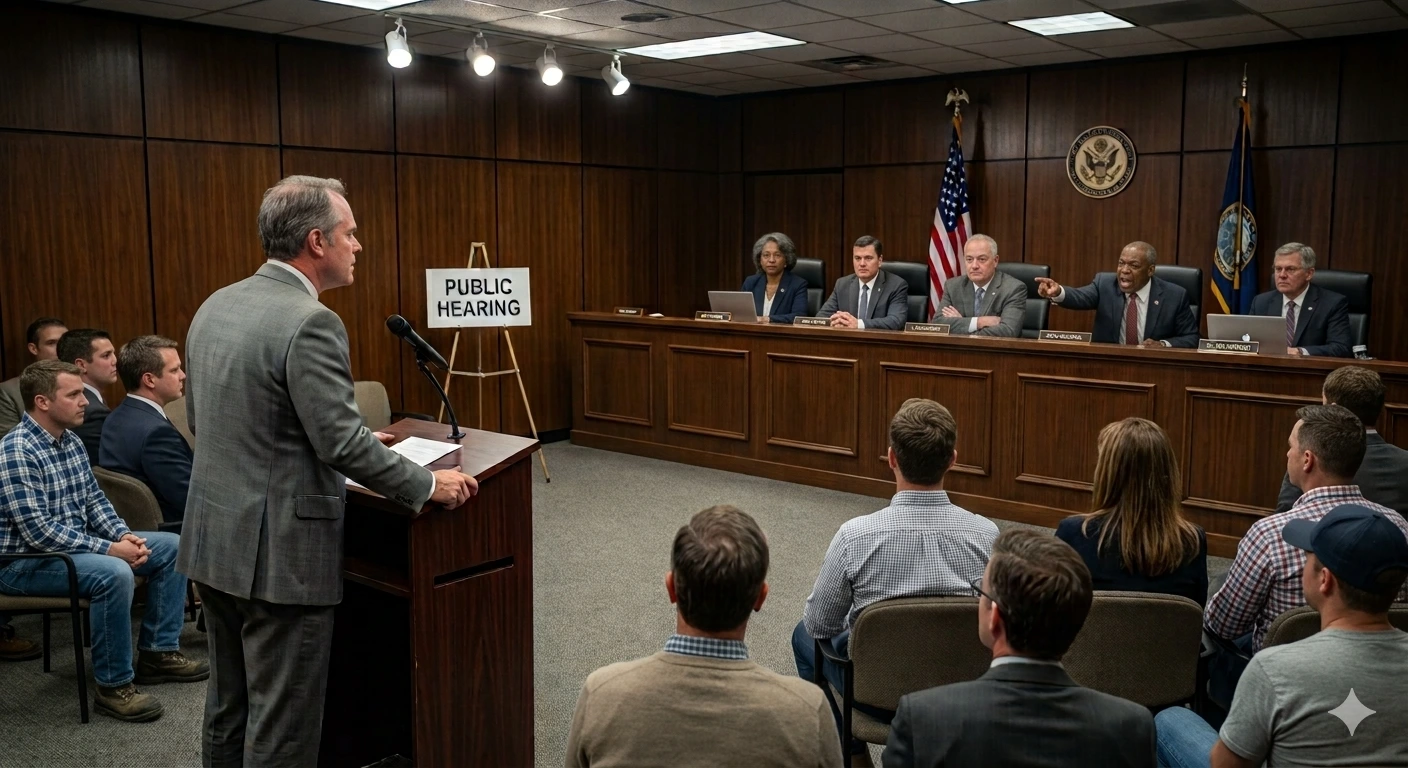
There are moments in a leadership life when the body tells the truth long before the mind is ready to hear it. For me, it often happened in the quiet seconds before stepping into a public meeting room. My notes were prepared, my experience solid, my intentions clear — yet my chest tightened, my breath shortened, and my mind began scanning for danger that wasn’t actually there. It was an instinctive bracing, a reflexive tightening, a kind of internal armor snapping into place.
I didn’t have a name for it then. I do now.
Many leaders who spend years in politically charged or high‑stakes environments develop trauma-like responses without ever calling them trauma. We learn to function, to perform, to endure. But the body keeps its own record. And sometimes, it speaks in ways we can no longer ignore.
The Environment That Shapes the Nervous System
The workplace where this pattern formed — the one I wrote about in Shock and Awe — was not simply stressful. It was unpredictable, politically volatile, and emotionally charged. Scrutiny was constant. Trust was fragile. Expectations shifted without warning. Public questioning could arrive with an edge sharp enough to cut, and the stakes always felt unusually high.
The name of the agency or individuals don’t matter. What does matters is the environment itself — the kind of place where your nervous system learns to anticipate threat, even when none is present.
Over time, I developed what I came to think of as organizational PTSD. Not in the clinical sense, but as a way of describing how years spent navigating a dysfunctional and high-stress workplace continued to influence my reactions long after I had left.
Hypervigilance. Anxiety. Physiological activation. A sense of bracing for conflict before a single word was spoken.
These were not character flaws. They were learned stress responses that resembled trauma reactions, and ‘organizational PTSD’ is the best shorthand I’ve found to describe them.
The Moment of Release
When I learned I was leaving that environment, something remarkable happened. My stress level dropped almost immediately — even though my future career was uncertain and I was, for the first time in decades, without a job.
My wife noticed it before I did. She commented on how much more relaxed I seemed, even without a job, how the tension that had become part of my daily posture had suddenly eased. It was as if my nervous system finally exhaled after years of holding its breath.
That contrast told me something important: I hadn’t just been stressed. I had been conditioned.
Healing in a Place That Valued Me
My next role was at an agency that valued my experience and expertise. The difference was profound. Trust began to rebuild. Confidence returned. I felt myself decompress emotionally, rediscovering parts of my leadership identity that had been buried under years of bracing.
Supportive environments don’t erase trauma, but they do create space for healing. They remind you what it feels like to be respected, to be heard, to be seen as capable rather than suspect. They help the nervous system relearn safety.
I was healing — slowly, steadily, quietly.
The Snap-Back Response
But healing is not linear.
Even in this healthier environment, when legitimate public questioning arose — the kind of scrutiny that is normal, appropriate, and part of public service — my nervous system defaulted to the old pattern.
It happened in milliseconds.
Anxiety. Heightened awareness. Racing heart. A jolt of adrenaline surged through my body, triggering reactions I thought I had left behind.
All of it invisible to the people around me. All of it masked by the professional façade I had learned to maintain. I spoke clearly. I answered confidently. I projected calm. But inside, the old survival response surged like a flash flood.
The questions themselves were not the problem. The environment was healthy. The expectations were reasonable. Yet my mind and body were responding to ghosts from another place and another time.
This is the essence of organizational PTSD: The body reacts before the brain can contextualize. The past overrides the present. The old threat overshadows the new reality.
It’s not about the current environment. It’s about the imprint left by the previous one.
The Professional Mask
Leaders often carry invisible burdens. We learn to steady our voices, regulate our expressions, and maintain composure even when our insides are churning. We become experts at presenting calmness while managing internal chaos.
For years, I lived with that duality — the outward professionalism and the inward tremor. It wasn’t deception. It was survival. It was leadership under pressure. And it was a skill I had honed so well that no one would have guessed what was happening beneath the surface.
But the body knew. And eventually, I had to listen.
Understanding Organizational PTSD
Organizational PTSD is not a clinical diagnosis. It’s a descriptive term used to capture trauma-like responses shaped by workplace environments where threat — emotional, political, reputational — becomes routine.
It often includes:
- hypervigilance
- anticipatory anxiety
- physiological activation
- avoidance of triggering situations
- emotional numbing
- conditioned fear responses
Public-sector leadership is uniquely vulnerable to this pattern. The combination of political dynamics, public scrutiny, and high-stakes decision-making creates conditions where the nervous system learns to brace for impact.
Even when the environment changes, the body may not immediately update its understanding of safety.
Reclaiming My Rhythm
Healing from organizational PTSD is not about erasing the past. It’s about understanding it. It’s about recognizing when old patterns resurface and gently reminding yourself that the present is not the past. It’s about separating legitimate scrutiny from conditioned fear. It’s about rebuilding trust in your own voice.
For me, reclaiming my rhythm has meant slowing down enough to notice the early signs — the tightening chest, the racing heart — and choosing not to let them dictate my response. It has meant acknowledging the emotional residue of leadership and giving myself permission to heal from it.
It has meant stepping into new chapters with honesty, clarity, and a deeper understanding of how environments shape us — and how we can reshape ourselves.
A Quiet Truth
Organizational PTSD isn’t a story about blame. It’s a story about impact. It’s about the imprint left by years of navigating high-stakes, politically charged environments. It’s about the quiet work of healing, the courage to name what happened, and the grace to move forward without bitterness.
Most of all, it’s about rediscovering your rhythm — the steadier beat that emerges once the noise quiets, once the body feels safe again, once you finally allow yourself to breathe.
This is the work of becoming whole again. And it’s work worth doing.
UR Insight
You learned to wear professionalism like armor, not because the role demanded perfection, but because the environment taught you that vulnerability wasn’t safe. The body remembers that training long after the job changes — and healing begins when you finally acknowledge how much of your steadiness was built for survival, not self-expression.
In short, the strengths that helped you survive a difficult environment can also become the barriers that keep you from fully being yourself.
You learned to wear professionalism like armor, not because the role demanded perfection, but because the environment taught you that vulnerability wasn’t safe. The body remembers that training long after the job changes — and healing begins when you finally acknowledge how much of your steadiness was built for survival, not self-expression.
UR Reflection Question
When did you realize the professional mask, you wore had become a survival strategy?
Up Next on Uncharted Rhythm
While I’ll return to the deeper work of Organizational PTSD in future posts — there’s more to explore there, and more stories worth naming — I’m shifting the lens for a moment toward another long arc of my life: the decades‑long journey of preparing for retirement.
Over the coming weeks, I’ll trace how my planning evolved across five distinct seasons — the shaky beginnings of my 20s, the partnership and parenting years of my 30s, the growing financial confidence of my 40s, the discipline and dedication of my 50s, and the final sprint toward the finish line in my 60s.
If your own path has felt nonlinear, late‑blooming, or shaped by life’s unpredictable turns, this series is meant to remind you that retirement isn’t built in a single decade. It’s built in layers — sometimes messy, sometimes intentional, always human.
Leave a Reply